Power Plant & Mining
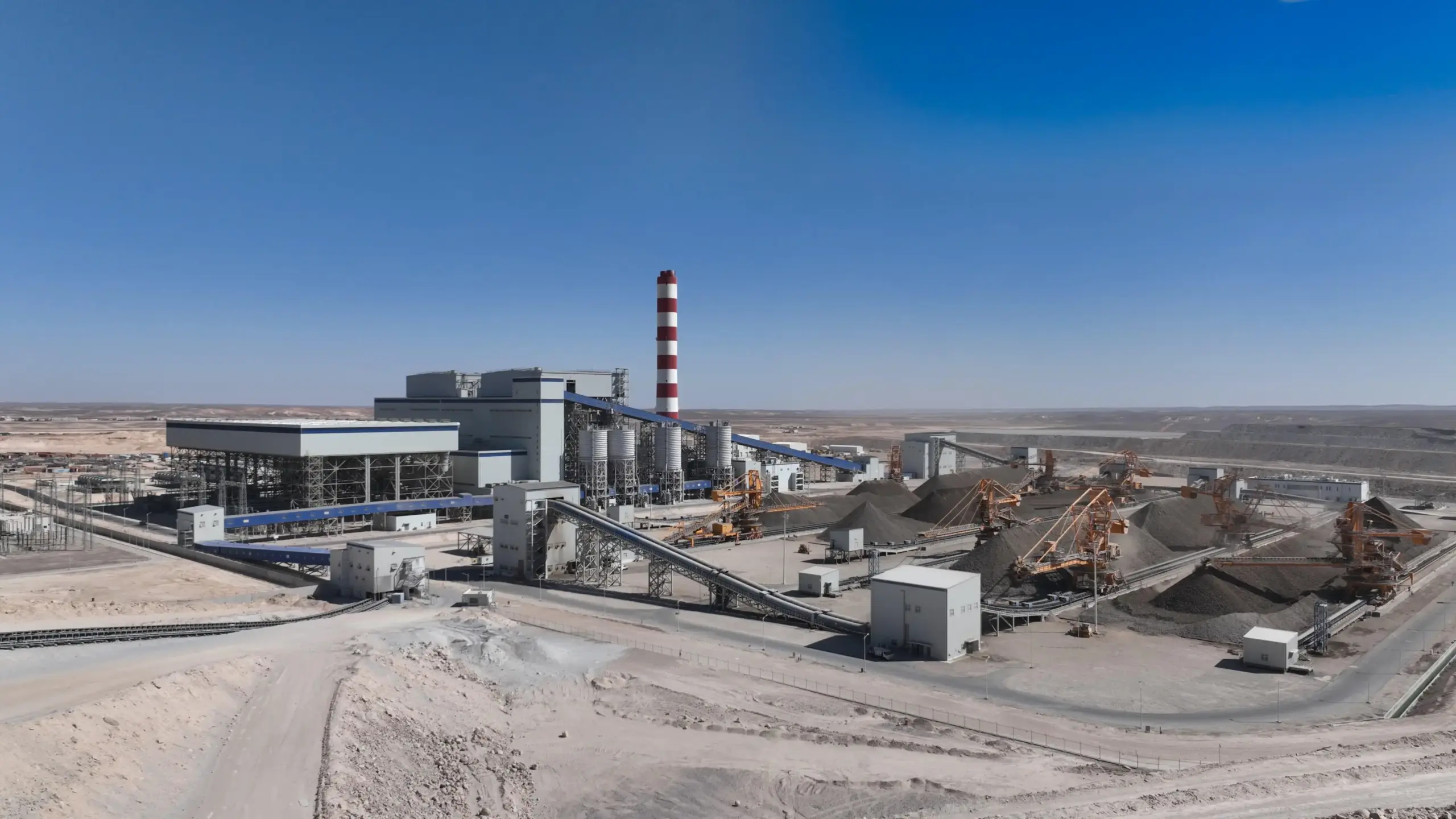
The Attarat Oil Shale Fired Power Plant
Annual Produced Net Output: Two 235MW (net) units.
Supplying ~17% of Jordan's annual electricity demand.
Back-energization: 6 Sep 2019
Unit 1 COD: 25 Oct 2022
Unit 2 COD: 26 May 2023
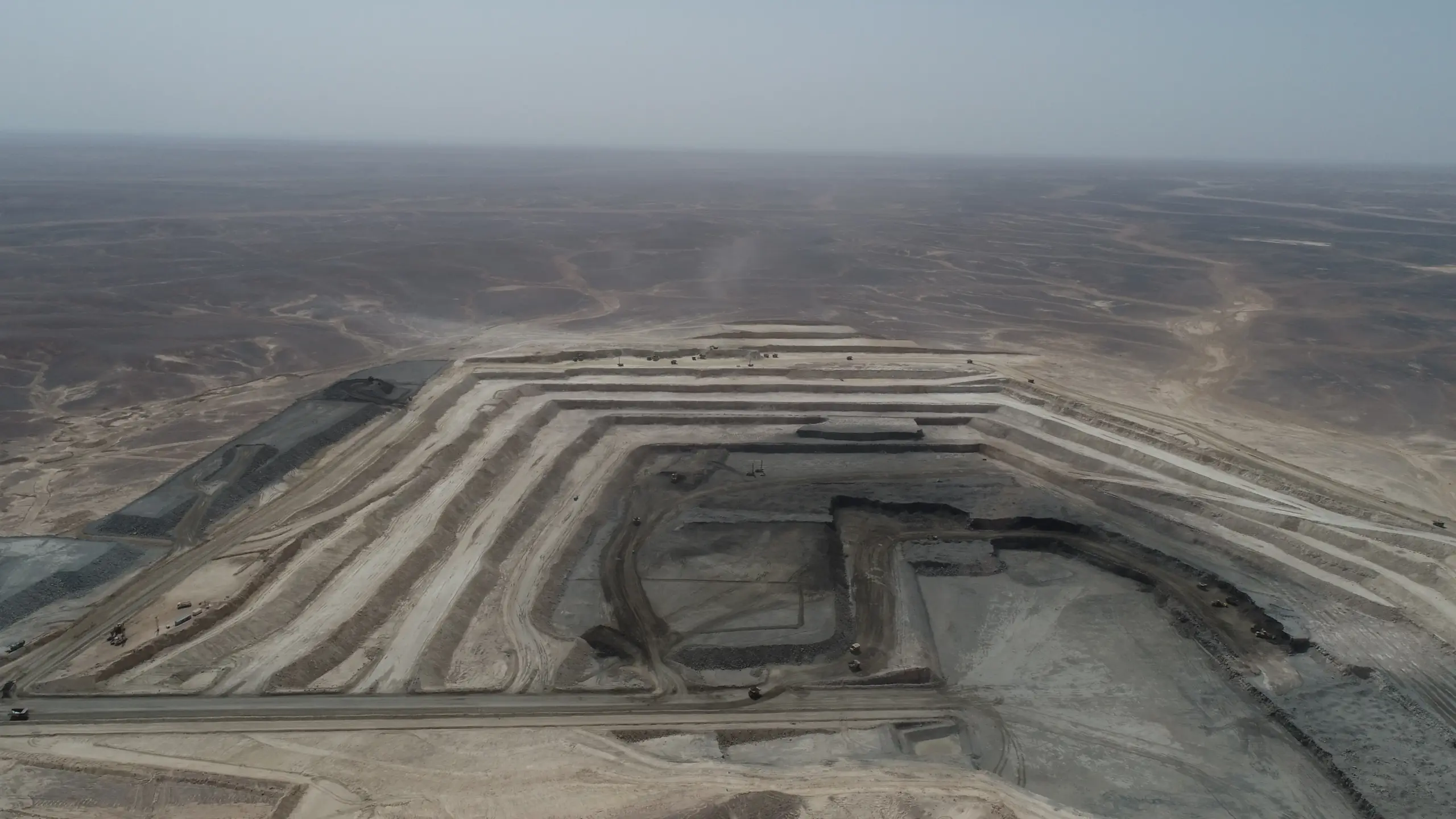
Open-cast mine consuming 10 million tonnes of oil shale annually.
Oil Shale Mine:First Extraction of Oil Shale: Apr 2019
Mine Completion: 26 May 2023
| Component | Particulars |
|---|---|
| Power Plant — Boilers | 2 × CFB Boilers (Sumitomo Foster Wheeler) |
| Power Plant – Turbine Generator | Siemens AG |
| Power Plant – Control System | Siemens AG |
| Power Plant Design | Worley Parsons |
| Unit 1 COD | 25 October 2022 |
| Unit 2 COD | 26 May 2023 |
| Back Energization | 6 September 2019 |
| Crushing & Conveying | 10~11 million tpa of oil shale capacity |
| Ash Handling | 6~7 million tpa of Ash disposal capacity |
| Open Pit Mining | First extraction: April 2019; Mine completion: 26 May 2023 |
| Overburden Removed | More than 100 million bank cubic meters (bcm) |
| Operational Mining Rate | c. 10~11 million tons of oil shale per annum |
| Water Supply | 9 operational wells: Annual Capacity 4 million m³ |
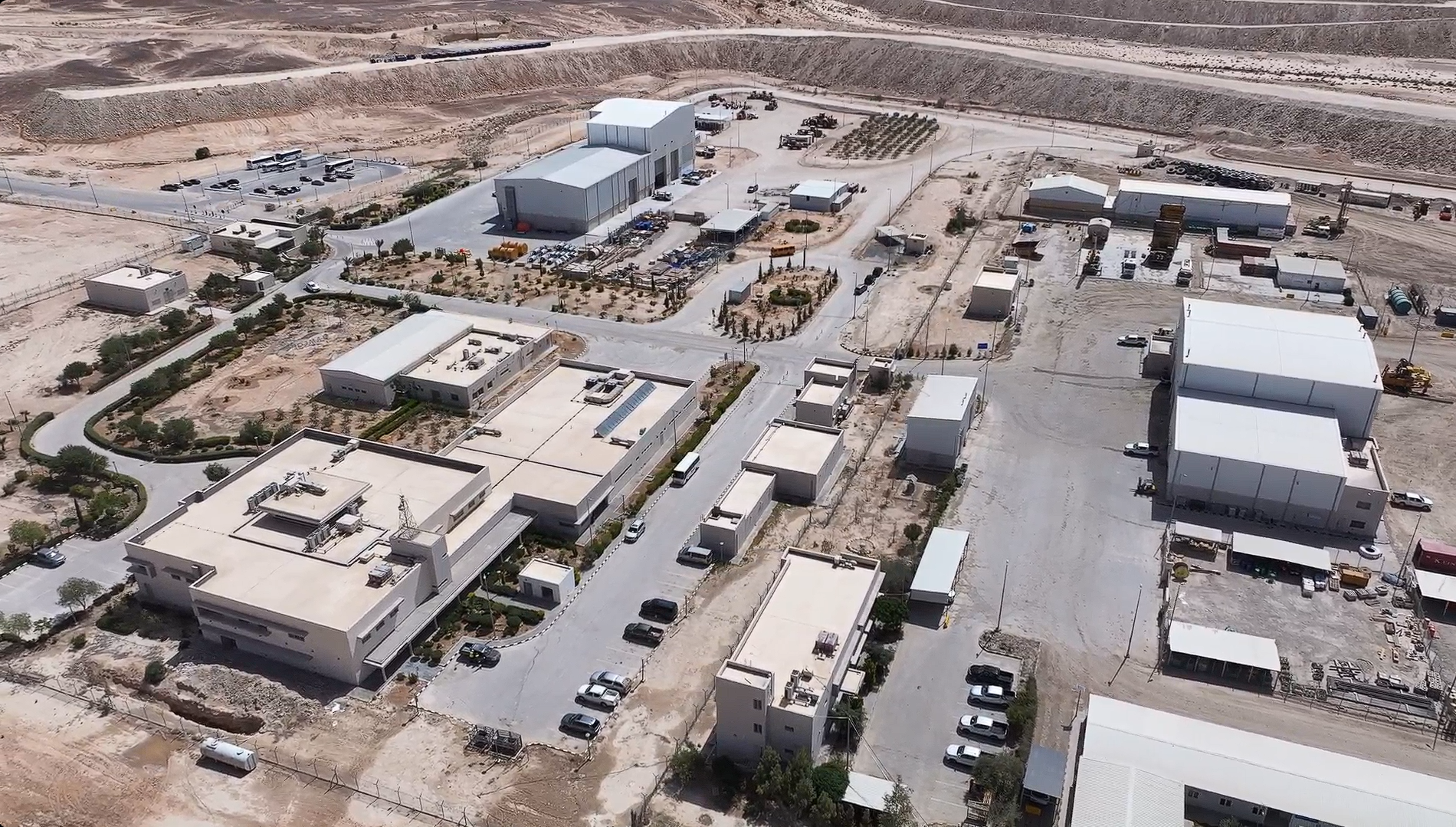
| Site Infrastructure | On-site housing camp, mining camp, explosive storage magazine |
| Transmission and Connection | NEPCO substation – Extendable for future units in the Power Plant |
| Auxiliaries and Balance of Plant | Firefighting and fire alarm, instrument and station air, telecommunication, electrification grid, demineralized water treatment, wastewater treatment, evaporation ponds and etc, |
| Location | Attarat Um Ghudran; 110 km from Amman, 300 km from Aqaba |
Project Components
Attarat Oil Shale Fired
Power Plant
Supporting
Infrastructure
View Component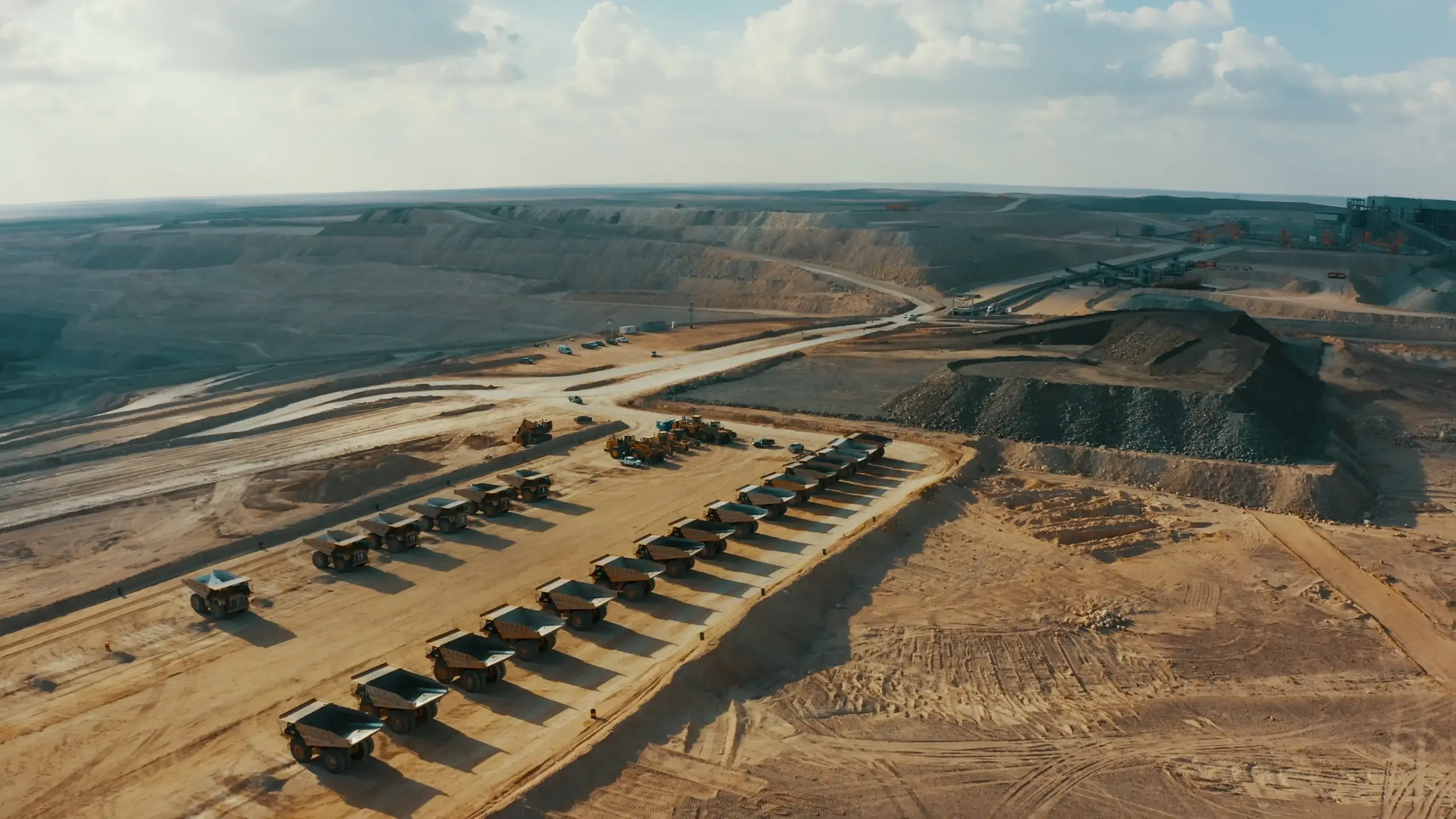
Attarat Oil Shale
Mine
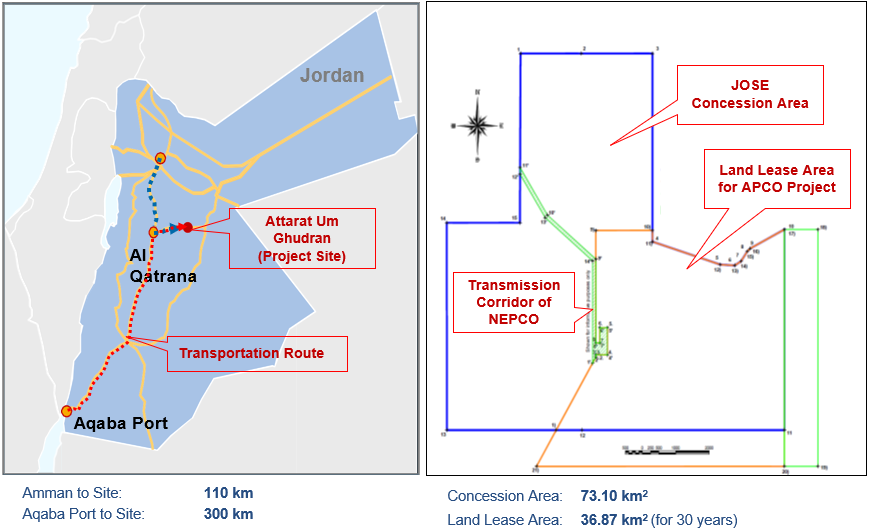
Attarat Um Ghudran Concession Area
The Project site is on a 37 km² development site in a remote uninhabited area in Attarat Um Ghudran, 110 km south east of Amman and 40 km east of the village of Al Qatrana. The site is easily accessible via the main desert highway between Amman and Aqaba.
APCO selected the oil shale deposit of Attarat Um Ghudran after extensive exploration and geological studies to confirm the quality and quantity of the oil shale.
The Attarat mine has sufficient oil shale resource to supply the power plant for up to 40 years.
What is Oil Shale?
A sedimentary rock rich in kerogen — Jordan's most significant natural resource, covering over 70% of the Kingdom's territory and totalling 70 billion tonnes.
The Science
Oil shale is a sedimentary rock rich in organic matter known as kerogen which when heated, breaks down and releases hydrocarbon. Oil shale can be thought of as a precursor to oil and natural gas; with more pressure and over longer geological time, the kerogen would heat to its oil and gas window to release crude oil or natural gas.
Oil shale is extracted using conventional mining techniques. It is crushed and burned as fuel to produce electricity or heated up using retorting system to produce synthetic shale oil — a synthetic crude oil which can be refined into diesel, petrol and jet fuels.
Oil Shale in Jordan
Energy is the blood of any country for growth and stability. Even with more renewables projects, Jordan continues to import more than 90% of the country's energy requirements — mainly natural gas and oil. It is a burden for Jordan and security of energy supply is dependent on foreign countries.
Oil shale is Jordan's most significant natural resource which covers over 70% of the Kingdom's territory, making Jordan the 7th richest country in the world in terms of oil shale deposits. Jordan's most significant deposits can be found in the west-central region of the Kingdom.